Today, April 11, Costa Rica, a country that today lives without an army, remembers the Battle of Rivas.
The battle took place in the city of Rivas, just north of the border, less than 80 kilometers from Las Catalinas. At the time, the threat came from the filibuster forces led by William Walker, an American adventurer who had taken control of Nicaragua and sought to expand his influence across Central America, threatening the sovereignty and independence of the region.
But this story is not only about where it happened. It is also about who stepped forward, and why.
In 1856, when the threat of the filibuster forces led by William Walker became clear, then-president Juan Rafael Mora Porras, known affectionately as Juanito Mora, issued a call to arms. His message called for unity, for the defense of sovereignty, and for solidarity with neighboring Central American countries under threat.
Men from across the country answered. Many came from humble conditions, living in poverty, with no military training and very limited equipment. What they carried instead was a shared sense of responsibility, courage, and love for their country.
In that context, Costa Rica’s victory can feel almost improbable. A moment shaped not by strength alone, but by collective will. A kind of miracle, woven from the conviction of many.
Part of this story unfolded closer to home, here in Guanacaste, at La Casona de Santa Rosa, within Santa Rosa National Park, where one of the first victories against Walker’s forces took place. Days later, the conflict continued at the Mesón de Guerra in Rivas.
After hours of intense fire from within the building, Costa Rican command ordered it to be set ablaze. Juan Santamaría carried the torch and managed to ignite the structure, an act that forced the retreat of the filibuster troops. He lost his life in the process, but his action became decisive in securing Costa Rica’s victory during the National Campaign of 1856.
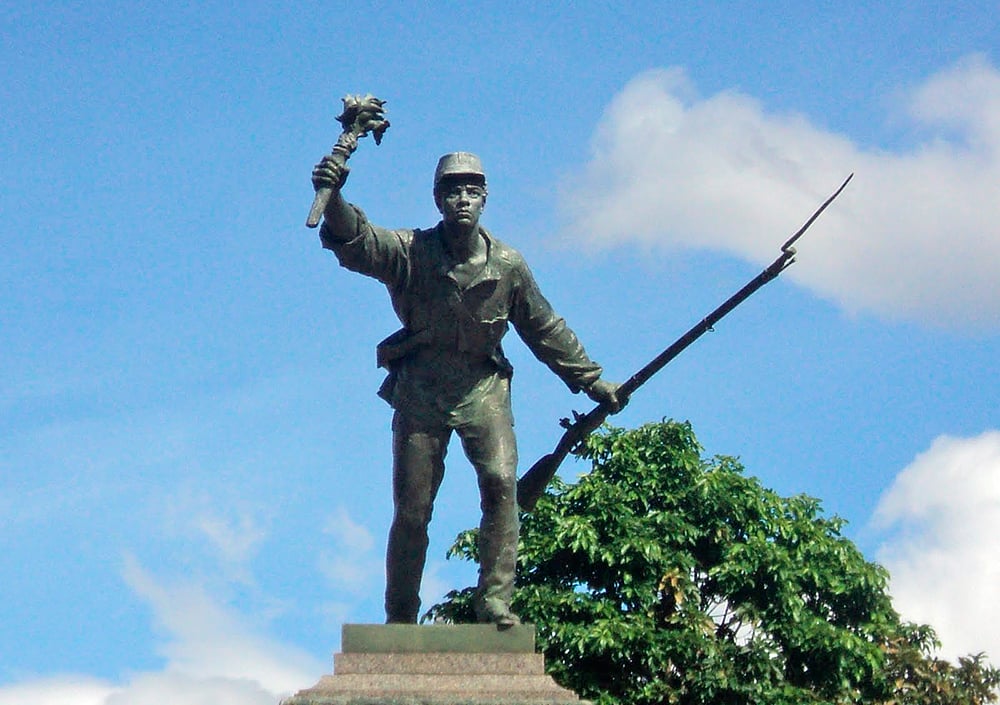
Today, a monument honors Juan Santamaría, portraying him strong, triumphant, and resolute. Yet his real story is more human. He was the son of a single mother, with no formal preparation and limited means.
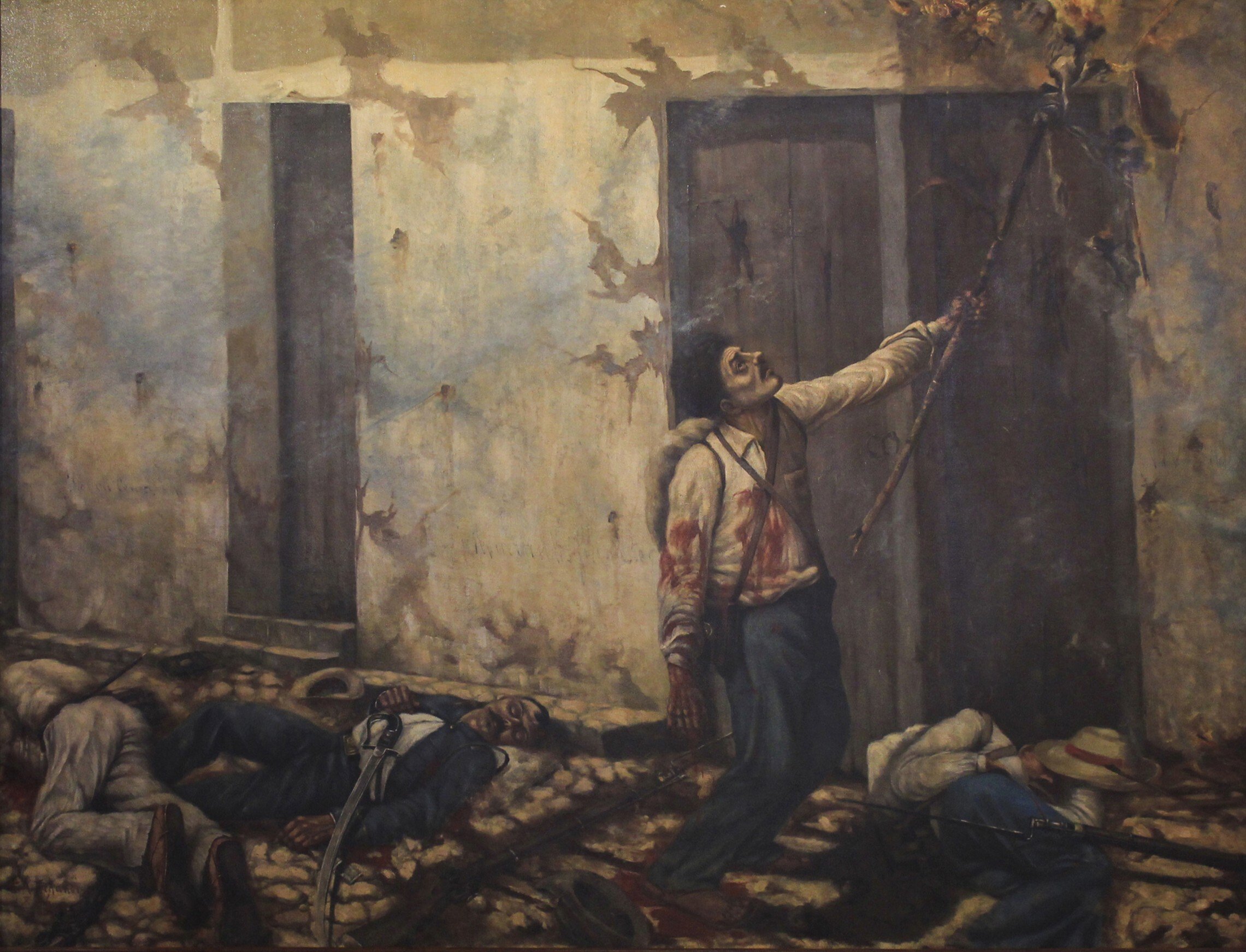
A different image emerges in the 1896 painting by Enrique Echandi, where he is depicted exhausted, wounded, and nearly collapsing as he fulfills the order to burn the Mesón. It is in this version that his act feels closer, not distant, but deeply human.
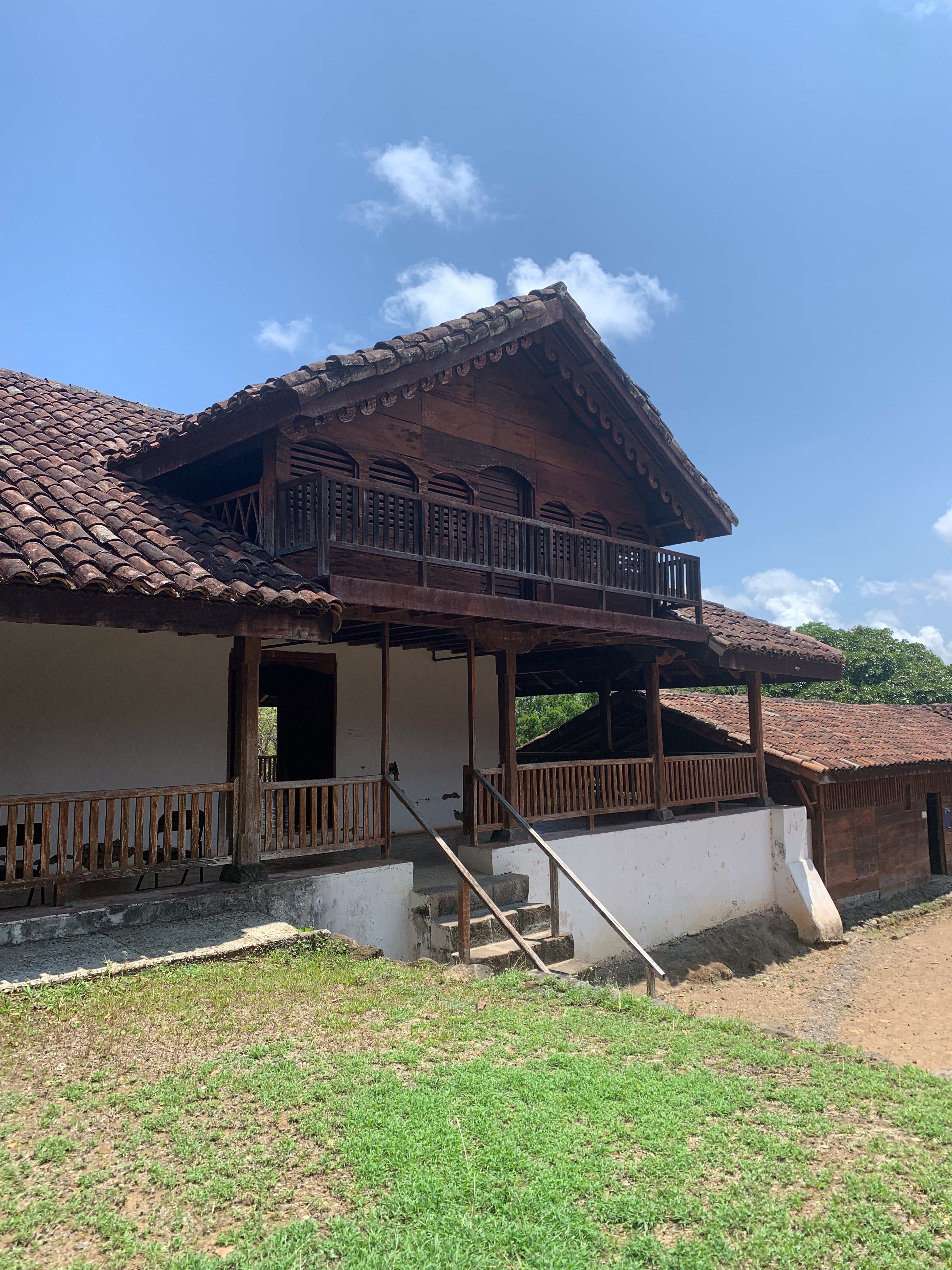
Today, La Casona remains as a museum and a place you can visit. The surrounding tropical dry forest, protected by the Área de Conservación Guanacaste, preserves a landscape that still feels familiar. You can walk through the museum, experience its architecture, and continue along the trail before climbing the stairs toward the Monumento a los Héroes.
At the top, the space opens into a quiet overlook. A place where the only sounds are those of the forest and the winds moving through the Guanacaste mountain range. It stands as a tribute to those who fought in the campaigns of 1856–1857 and again in 1955.
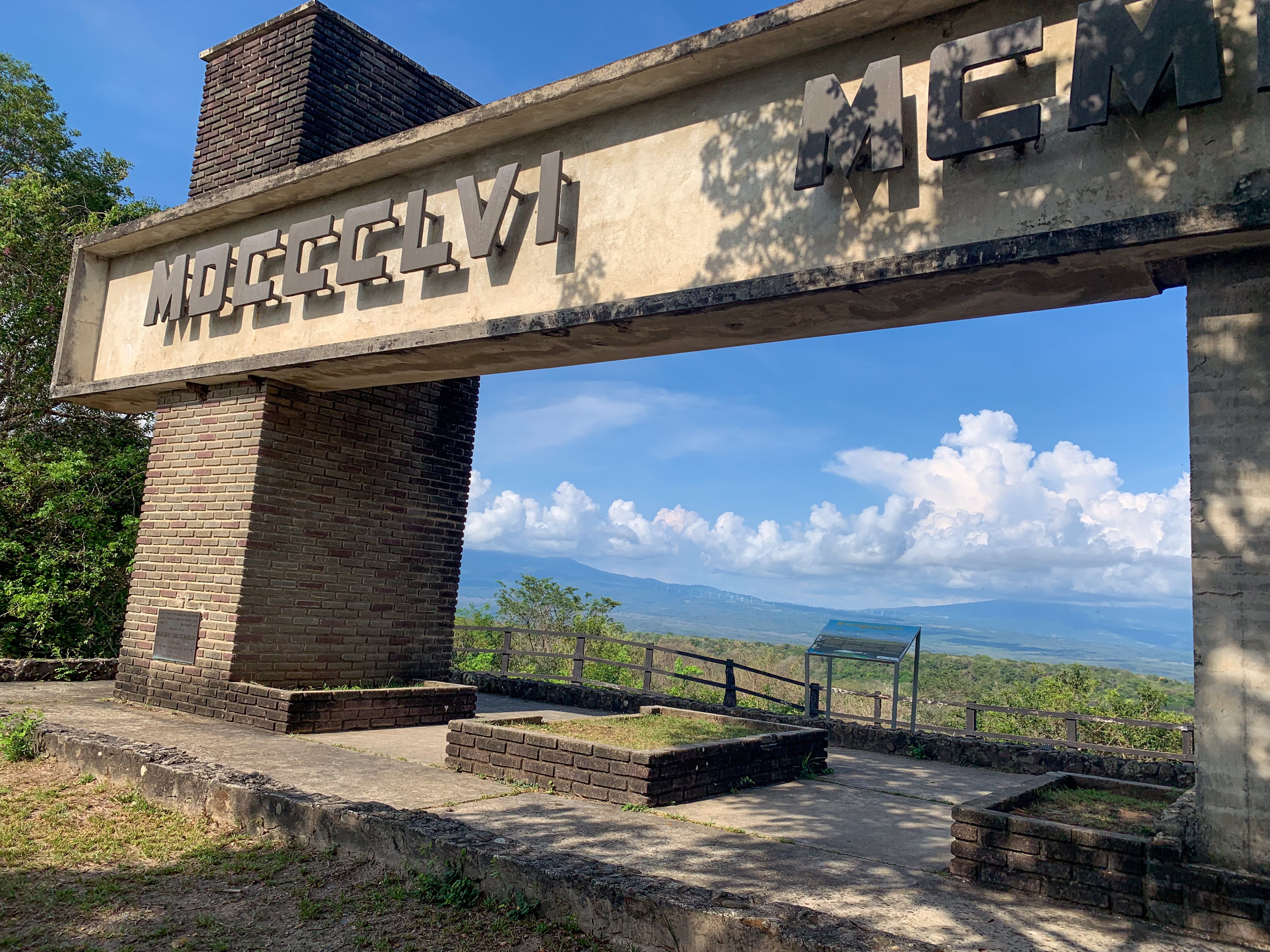
From this point, you can see the volcanic chain to the east, including Orosí, Cacao, and Rincón de la Vieja, and toward the west, the vast outline of the Santa Elena Peninsula.
Standing there, surrounded by nature and history, the story feels closer. This place holds the memory of a collective victory, shaped by people who, despite not having what was thought necessary, found the courage to overcome those limitations and fight for the freedom and sovereignty that continue to be part of Costa Rica today. Not only because of distance, but because the landscape, the climate, and the rhythm of this place remain shared.