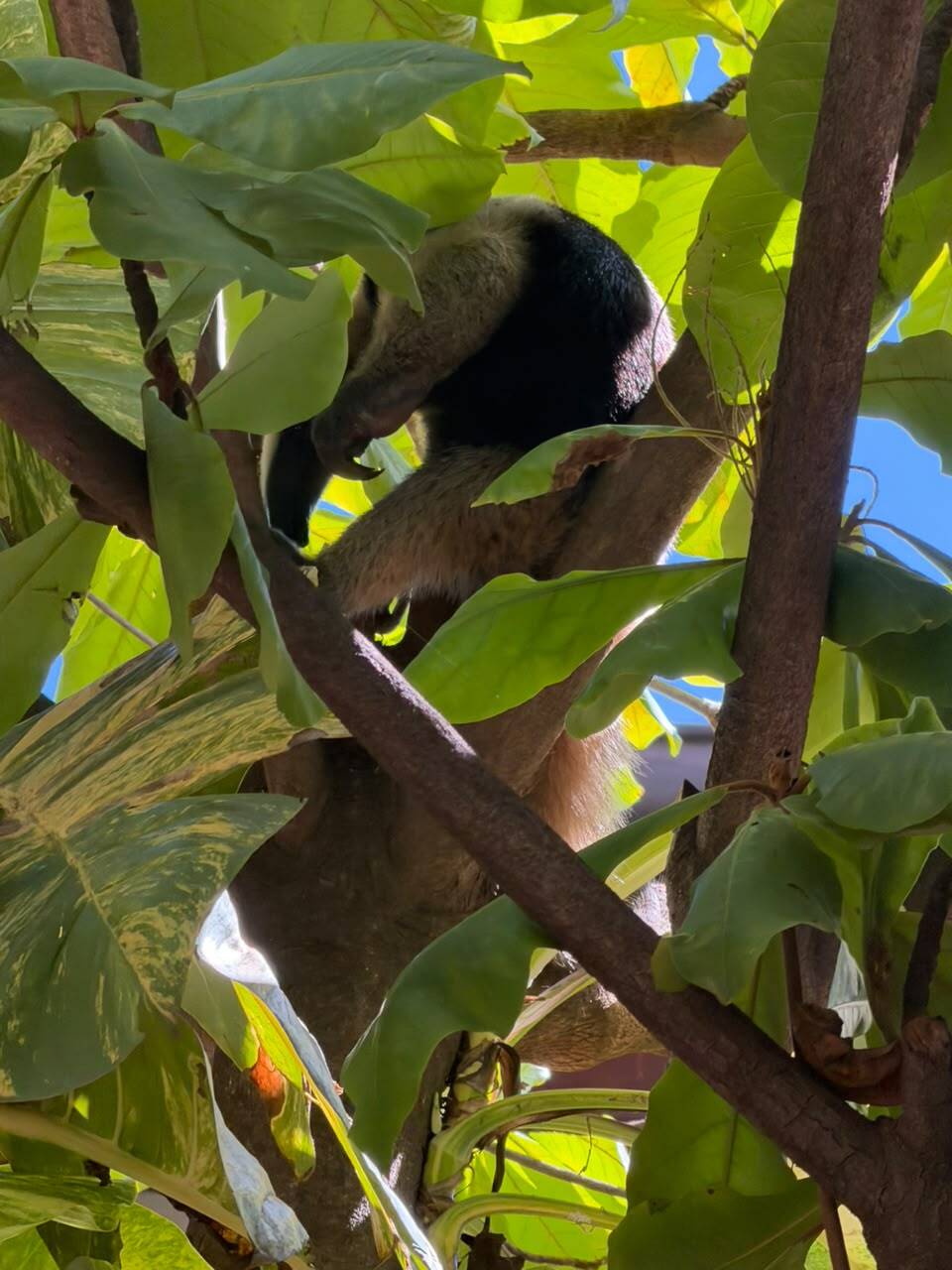
This week, Plaza Danta had a visitor who did not go unnoticed: a northern tamandua, the small anteater Costa Ricans call oso hormiguero or oso colmenero, settled calmly on one of the branches of the plaza’s trees, unbothered by the life of Town below while neighbors and passersby stopped to look up and take in a sighting that does not happen every day in the heart of Las Catalinas.
Spotting one in a tree is less surprising than it sounds, because tamanduas live between the ground and the canopy. They spend a large share of their active hours in trees, and most of the places they choose to rest are up high, on branches, in hollow trunks or in tangles of vines, likely as a way to stay out of reach of predators such as ocelots and pumas. They are mostly nocturnal but often active during the day, and it is not unusual to find one sleeping on a shaded branch in daylight, which may well have been the case with our visitor. It may also have been foraging. A tamandua finds ant and termite nests by smell, tears into bark and dead wood with the oversized claw on each front foot, anchors itself with a strong prehensile tail, and reaches inside with a long, sticky tongue, since it has no teeth at all.
What makes the tamandua such a good neighbor in the ecosystem is the way it eats. In a single day it can visit between 50 and 80 ant and termite nests and eat around 9,000 insects, yet it only feeds for a short time at each one before the colony’s defenses send it on its way, so the nests it visits are left to recover rather than destroyed. It takes a little from many places instead of everything from one, a way of living in the dry forest that keeps it fed without exhausting what it depends on.
Tamanduas are not seasonal visitors, and they can be found across nearly all of Costa Rica, including the tropical dry forest of Guanacaste, so there is no particular time of year to see them. Researchers note that their seasonal behavior is still poorly understood, though some records suggest they move around more during the dry season, when food becomes harder to find, which is worth keeping in mind as Guanacaste begins its transition from the green season into the dry months.
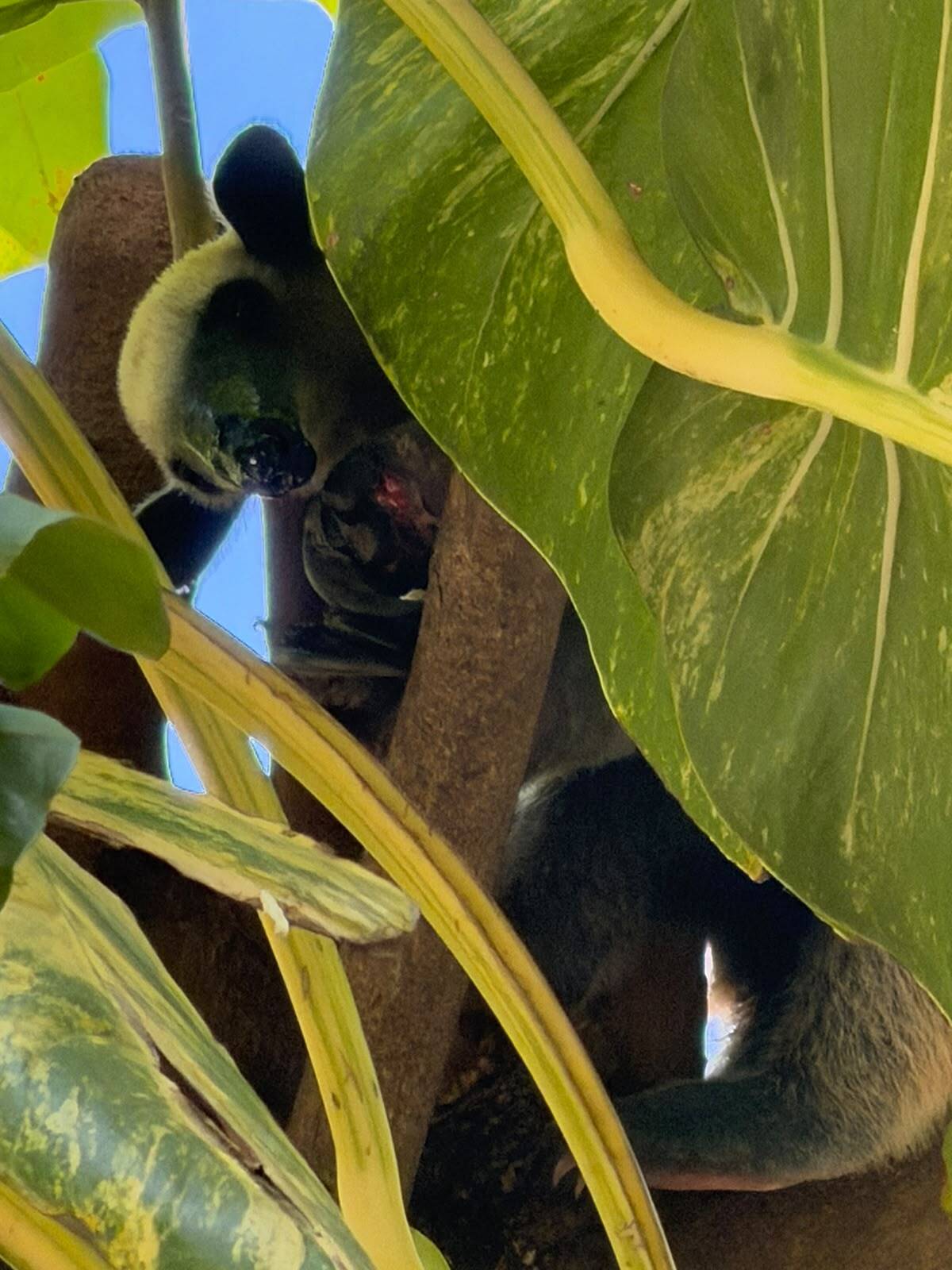
Last year, a tamandua was spotted along the trails, where trees are tall and the foliage is thick and encounters like that feel more expected. Seeing one in Plaza Danta, farther from the most forested parts of Town, felt like a privilege, and a lovely sign of how the trees that shade our streets and plazas are also part of the landscape that wildlife moves through. If you are lucky enough to come across a tamandua, enjoy it from a respectful distance, keep dogs close, and resist the urge to get near or touch it, since when it feels threatened it can rear up on its hind legs and tail, swipe with those powerful claws and release a strong, unpleasant odor. And if you spot one, or any other wildlife in Town, we would love to hear about it and share it here in The Daily.